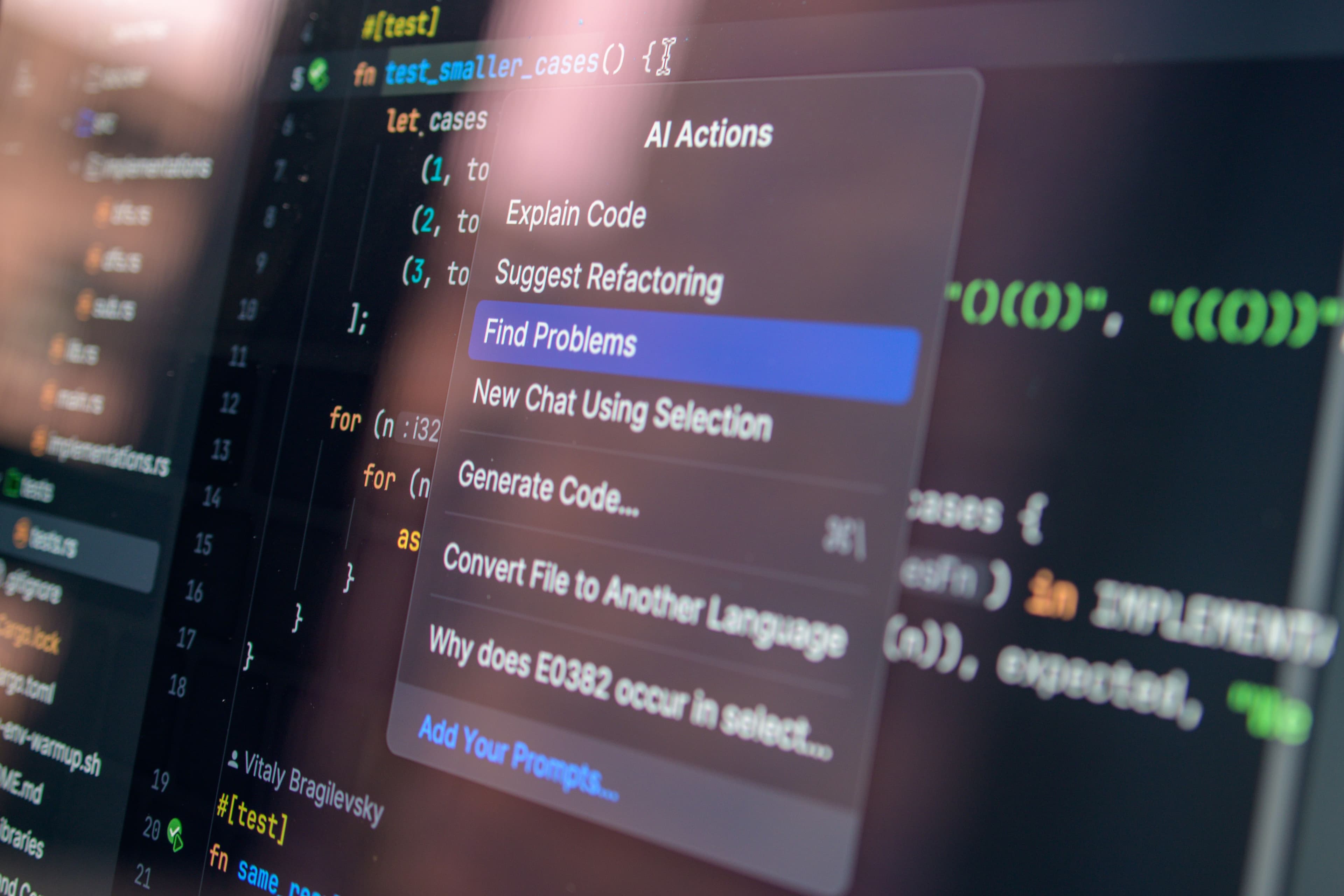
Software engineering is undergoing a quiet shift as teams increasingly integrate artificial intelligence into production environments. However, a critical industry discussion has brought to light an alarming trend: a widening gap in the shared understanding of what large language models can actually do. While some professionals view these models as near-autonomous agents capable of reasoning, others recognize their strict statistical boundaries. Here at Digital Pathshala Nepal, we are closely tracking how this fundamental mismatch in expectations is beginning to impact real-world software development.
What is it?
Large language models, commonly known as LLMs, are advanced neural networks trained on vast amounts of text data to predict and generate human-like language. Beneath their conversational interfaces, these systems operate purely on probabilistic pattern matching rather than true logical reasoning or factual comprehension. They excel at text summarization, syntax translation, and pattern completion, but they inherently lack a persistent model of the physical world, self-correction mechanisms, or true intentionality. Because they speak our language fluently, users often project human-like cognitive abilities onto systems that are fundamentally mathematical engines.
What happened?
Recent industry discourse sparked by prominent AI researchers and practitioners has highlighted a dangerous divergence in how engineering teams evaluate LLM capabilities. The core issue is that many teams and stakeholders harbor wildly inaccurate mental models of these systems' reliability. Some expect models to handle complex, multi-step logic reliably without guardrails, while others overcompensate by treating them as entirely unusable for critical tasks. This perception gap leads to severe architectural miscalculations. When developers build software assuming an LLM possesses consistent reasoning skills, the system inevitably fails at edge cases, leading to brittle applications, unexpected runtime errors, and security vulnerabilities.
Why it matters
This perceptual divide has immediate, concrete consequences for software engineering teams. When product managers and developers do not share a realistic baseline of AI capabilities, sprint planning and system architecture suffer. Teams frequently waste weeks debugging intermittent failures caused by prompt drift or hallucinations, treating them as simple bugs rather than fundamental limitations of probabilistic models. Furthermore, building reliable software on top of unreliable components requires rigorous defensive programming, including deterministic validation layers, robust fallback mechanisms, and strict input-output schemas. Without an accurate assessment of AI limits, engineering organizations risk deploying systems that appear to work during demos but fail catastrophically under production stress.
Key takeaways
- Large language models are probabilistic pattern-matching engines, not logical reasoners, making their outputs inherently non-deterministic.
- A widening perception gap among developers and stakeholders is leading to poor architectural decisions and fragile software integrations.
- Building dependable systems requires treating LLM outputs as untrusted data that must be validated with traditional deterministic code.
- Accurately mapping AI boundaries helps teams avoid costly production failures and design more resilient software pipelines.
Want to learn web development, app development, or coding? Digital Pathshala Nepal offers practical IT courses for beginners and career switchers in Nepal.